Why RS Academy Practical Training Works
We do not teach engineering solely from slides or blackboard diagrams. In compliance with Volume 07 (Practical Laboratory and Field Training System), learning follows a strict 4-step progressive loop: Master Demonstration → Guided Repetition → Unassisted Timed Execution → Planted Fault Isolation.
Hands-on bench wiring of industrial Motor Control Centers (MCC), Air Circuit Breakers (ACB), Moulded Case Circuit Breakers (MCCB), and busbars.
Before touching any terminal, learners must execute the statutory isolation sequence: Isolate, Lockout/Tagout (LOTO), test meter on known source, test circuit, and re-test meter.
Wire power and control logic circuits from scratch using contactors, thermal overload relays, pushbuttons, and auxiliary interlocks.
Wire industrial VFD drives, parameterize acceleration/deceleration ramps, set maximum frequency limits, and wire potentiometer and digital remote run inputs.
Wire APFC relay controllers, capacitor banks, and detuned series reactors to maintain statutory power factor above 0.98.
Execute physical soil fall-of-potential testing using 4-terminal earth megohm meters and inspect neutral-earth voltage loops.
Standardized Academic Curriculum
Each module is structured to deliver an engineered result that the graduate can physically prove to prospective employers and clients.
3-phase power theory (star vs delta configurations), neutral earthing principles, cable sizing by continuous current and voltage drop limits, and transformer fundamentals.
Master demonstration: ACB racking in and out, contact resistance testing, thermal magnetic release curves, and protective relay settings.
Constructing control circuits on protective training boards: multi-contactor interlocks, timer-based automatic transfer switches (ATS), and forward-reverse motor logic.
Assemble a functional Star-Delta motor starter panel from technical circuit schematics without guidance, achieving clean ferrule labeling in under 2 hours.
Field exposure ladder: inspecting dry-type and oil-filled distribution transformers, checking silica gel breathers, and reading capacitor bank current balances.
Step-by-step substation and panel preventive maintenance (PPM) workflow: thermal thermography scanning, terminal torque tightening, and cleaning with air blowers.
Preparing formal electrical load sanctions, single-line diagrams (SLD), as-built panel drawings, and statutory inspection compliance certificates.
Uncompromising pass/fail gate: LOTO procedures, flash boundary safety, dielectric glove testing, arc flash visor protocols, and emergency CPR protocols.
Takeoffs from architectural CAD floor plans: counting light/power points, measuring cable tray running meters, breaker sizing, and labor man-hour estimation.
Documenting single-line diagrams created, insulation test megger logs, panel wiring photographs, and supervisor sign-offs into the professional portfolio.
Multi-stage assessment: written theory exam, timed wiring execution, live breaker fault diagnosis, safety gate compliance, and oral engineering viva.
Preparation for supervisor licensing exams (CEA regulations), industrial maintenance recruitment, and starting an independent electrical contracting firm.
Selected Hands-On Workbench Practicals
Every student is assigned a dedicated workbench and must achieve satisfactory evaluation on all safety-critical lab tasks before receiving course credentialing.
Verify complete zero-voltage condition on 415V 3-phase incoming feeders with calibrated CAT-III meters.
Wire power and latching control circuits with start/stop buttons, indication lamps, and overload trip relays.
Wire 3 contactors with electronic star-delta timers, mechanical interlocks, and test starting current transition.
Wire 3-phase induction motor to VFD; program motor parameters, speed ramps, and configure multi-speed digital inputs.
Perform 500V/1000V DC insulation tests across motor windings and between phases; interpret dielectric absorption ratio.
Drive potential and current test spikes into earth; measure ground pit resistance; verify values under 1.0 Ohm.
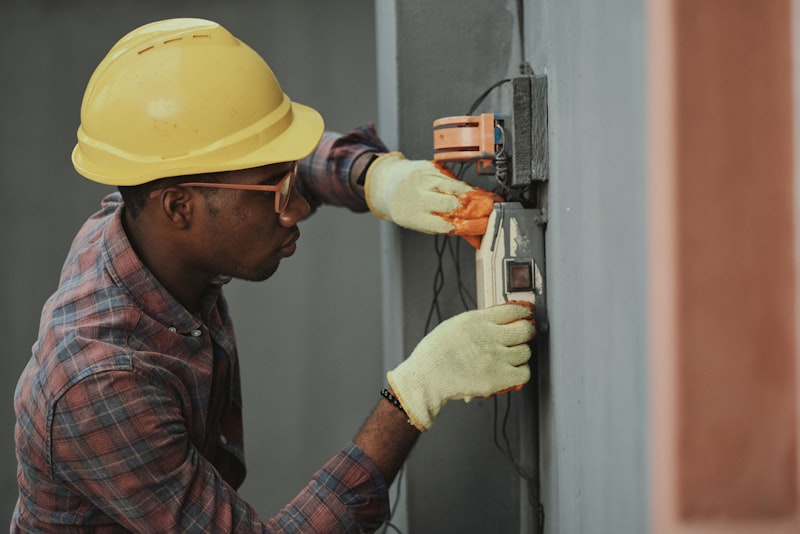
Real Commercial Project Visits
Under Volume 07, field training is delivered across 4 structured authority stages:
Book Campus Lab Walkthrough
Inspect the live equipment benches at our Patiala campus (Leela Bhawan) and discuss your technical background with a senior instructor.
Apply / Reserve Free Electrical Lab Walkthrough →Takes 30 seconds on our unified Candidate Enrollment form (Electrical Power & Switchgear pre-selected).