Parent Engineering Firm: RS Electrical & HVAC Solutions ↗ | Operating Since 2004 across North India
🏫 SCHOOL PARTNERSHIPS: Turnkey Practical Curricula & Laboratories for CBSE, ICSE & Private Schools • 🛠️ 12 LEARNING DEPARTMENTS: Electrical, Woodwork, Horticulture, AI, Finance, HVAC, Nutrition & More • ⚡ TECHNICAL ACADEMY: Contractor-Grade HVAC, 415V Switchgear, MEP & Facility Management • 🛡️ 100% CHILD SAFEGUARDING: Police-Verified Specialist Instructors & POSH/POCSO Standards • Schedule Institutional Planning Meeting → • 🏫 SCHOOL PARTNERSHIPS: Turnkey Practical Curricula & Laboratories for CBSE, ICSE & Private Schools • 🛠️ 12 LEARNING DEPARTMENTS: Electrical, Woodwork, Horticulture, AI, Finance, HVAC, Nutrition & More • ⚡ TECHNICAL ACADEMY: Contractor-Grade HVAC, 415V Switchgear, MEP & Facility Management • 🛡️ 100% CHILD SAFEGUARDING: Police-Verified Specialist Instructors & POSH/POCSO Standards • Schedule Institutional Planning Meeting →
Home
SCH-HVC / HVC-P • MASTER ACADEMIC CURRICULUM

School of HVAC & Refrigeration Systems

Professional Heating, Ventilation, Air Conditioning & Commercial Chiller Engineering

Air conditioning and refrigeration are critical infrastructure systems across India, powering data centers, hospitals, pharmaceuticals, commercial complexes, and retail chains. Built on Volume 03 of our academic curriculum, this program delivers hands-on practical competence on actual commercial machinery.

AEO DIRECT ANSWER
What does the HVAC course at RS Academy Patiala cover, and who is it suitable for?

The RS Academy HVAC Course is a 4-to-6 month (350+ hours) intensive practical program focused on commercial heating, ventilation, air conditioning, and refrigeration systems. It covers oxy-acetylene copper brazing with nitrogen purge, dual-stage vacuum decay holding below 500 microns, multi-split VRV/VRF inverter commissioning, chiller maintenance, and AHU air balancing. Designed for 10th/12th matriculates, ITI RAC graduates, and diploma engineers seeking technician, supervisory, or overseas trade careers.

COURSE DURATION
4 to 6 Months (350+ Hours)
HOURS ALLOCATION
Theory: 104 hrs (21%) | Practical: 277 hrs (55%) | Field Exposure: 58 hrs (12%) | Assessments: 61 hrs (12%)
PRACTICAL RIG RATIO
Over 60% Bench & Rig Time
INCLUDED TOOLKIT
1-Yr RS Engineering Calculators
PRACTICAL TEACHING ARCHITECTURE

Why RS Academy Practical Training Works

We do not teach engineering solely from slides or blackboard diagrams. In compliance with Volume 07 (Practical Laboratory and Field Training System), learning follows a strict 4-step progressive loop: Master Demonstration → Guided Repetition → Unassisted Timed Execution → Planted Fault Isolation.

✓ Live Refrigerant Rigs & Nitrogen Purging

Every student performs copper pipe flaring, swaging, and oxy-acetylene torch brazing with dry nitrogen purging to eliminate internal oxidation soot.

✓ 2-Stage Vacuum Decay Below 500 Microns

Hands-on evacuation using 2-stage rotary vane vacuum pumps, micron gauges, and electronic decay holding tests before refrigerant charging.

✓ Planted Fault Troubleshooting

Trainers insert real electrical and cycle faults (blown capacitors, stuck TXVs, bad thermistors, reversed fan rotations) for timed diagnostic resolution.

✓ VRV/VRF Multi-Split Inverter Systems

Wiring communication buses, setting rotary DIP addresses, oil recovery cycles, and analyzing electronic expansion valve (EEV) pulses.

✓ L0 → L3 Field Project Exposure

Supervised on-site inspection of operating centrifugal and air-cooled chillers, cooling towers, and commercial air handling units (AHUs).

✓ Complete Contracting Commercial BOQ

Calculate room-by-room cooling loads (E20 sheets), size copper piping for velocity limits, estimate duct gauge sheets, and quote formal commercial contracts.

COMPLETE 12-MODULE FRAMEWORK

Standardized Academic Curriculum

Each module is structured to deliver an engineered result that the graduate can physically prove to prospective employers and clients.

Module 01: Core Thermodynamics & Electrical Theory COMPETENCY MODULE

Refrigeration vapour-compression cycle (P-h Mollier diagrams), subcooling, superheat calculations, R32/R410A/R134a refrigerants, single & 3-phase compressor motors, run capacitors, contactors, and control transformers.

Module 02: Expert Master Demonstrations COMPETENCY MODULE

Master trainer live walkthroughs: safe electrical lock-out/tag-out, digital manifold gauge setup, dual-stage evacuation, torch brazing techniques, and flare torque specifications.

Module 03: Guided Practice & Bench Drills COMPETENCY MODULE

Supervised student rotations on dedicated rigs: copper tube bending without kinking, brazing copper-to-brass joints under nitrogen flow, and flare tightening to factory torque.

Module 04: Independent Timed Bench Work COMPETENCY MODULE

Unassisted timed execution: complete a full split AC installation in under 3 hours, hold 600 PSI nitrogen test for 24 hours without drop, and evacuate below 500 microns unassisted.

Module 05: Supervised Field Site Tasks COMPETENCY MODULE

Field exposure ladder at operational commercial sites: recording chiller logs, inspecting AHU belt tension and static pressure, and testing cooling tower water distribution.

Module 06: Commercial Service Workflow COMPETENCY MODULE

End-to-end execution protocol: from client complaint intake, diagnostic troubleshooting checklist, job card creation, parts requisition, execution, testing to formal customer sign-off.

Module 07: Technical Client Communication COMPETENCY MODULE

Explaining technical faults in plain client terms, providing transparent repair quotes, setting realistic timeline expectations, and handling warranty documentation.

Module 08: Mandatory Safety Gate (Pass/Fail) COMPETENCY MODULE

Strict compliance hurdle: G-PPE (Personal Protective Equipment), G-BRAZE (torch safety & nitrogen regulators), G-REF (safe recovery & flammability controls), and G-HEIGHT (fall protection).

Module 09: Estimation, Costing & Contracting COMPETENCY MODULE

Calculating material costs, copper running feet, sheet metal duct weight, labour man-hours, equipment margin calculations, and formulating commercial AMC proposals.

Module 10: Student Evidence Dossier & Portfolio COMPETENCY MODULE

Compiling verified service reports, brazing inspection certificates, evacuation logs, and wiring schematics into an ATS-compatible technical dossier.

Module 11: Formal Assessment & Certification COMPETENCY MODULE

Rigorous multi-stage evaluation: 20% Theory Examination, 40% Practical Execution, 20% Planted Fault Diagnosis, 10% Safety Gating, and 10% Technical Viva Voce.

Module 12: Career Dispatch & Contracting Setup COMPETENCY MODULE

Technical interview coaching, trade test preparation for Gulf/NCR engineering firms, vendor trade account registration, and contractor license roadmap.

VOLUME 07 LAB REGISTER

Selected Hands-On Workbench Practicals

Every student is assigned a dedicated workbench and must achieve satisfactory evaluation on all safety-critical lab tasks before receiving course credentialing.

P01 • Safe Electrical Isolation

Verify de-energization using calibrated multimeters and clip-on ammeters. Proving dead gate G01.

P03 • Oxy-Acetylene Copper Brazing

Braze 3 pipe joints with dry nitrogen purging; pass 450 PSI nitrogen pressure bubble & hold test.

P06 • Dual-Stage Vacuum Evacuation

Evacuate split/VRF system to below 500 microns; perform 15-minute standing vacuum decay test.

P07 • Complete Split AC Installation

Mount indoor/outdoor unit, flare piping, wire interconnect, pressure test, vacuum, and commission within 3 hours.

P09 • Planted Electrical Fault Isolation

Locate and rectify intentionally planted wiring open, short, or bad sensor faults in under 45 minutes.

P12 • Planted Refrigeration Cycle Diagnostics

Identify non-condensables, undercharge, overcharge, or restricted expansion device through P-T analysis.

P15 • AHU Static Balancing & Airflow

Measure blower static pressure, calculate CFM via anemometer, and adjust drive belt pulleys for balance.
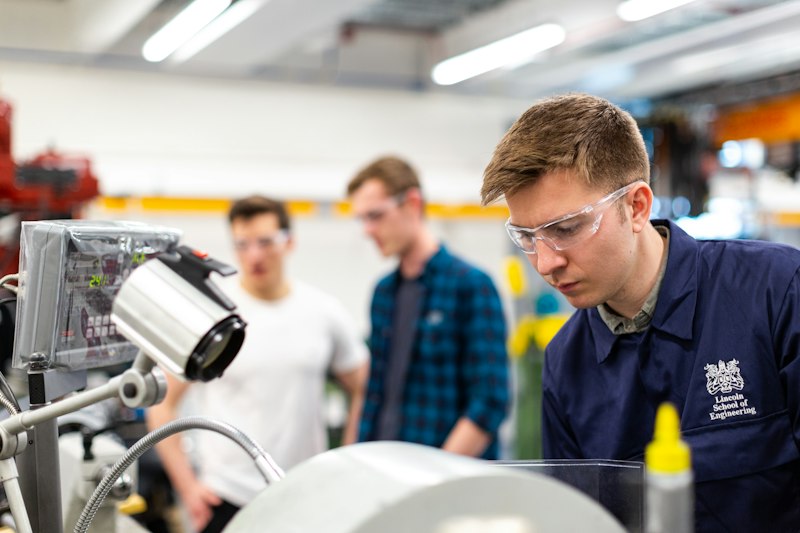
School of HVAC & Refrigeration Systems
SUPERVISED FIELD EXPOSURE LADDER

Real Commercial Project Visits

Under Volume 07, field training is delivered across 4 structured authority stages:

L0 • Observe: Commercial plant room audits under trainer escort. Chiller logs & panel thermography.
L1 • Assist: Cable labeling, tool handling & filter cleaning under permit.
L2 • Perform: Supervised testing & insulation checks on verified de-energised systems.
L3 • Lead: Advanced student task execution with written Principal authorization.

Book Campus Lab Walkthrough

Inspect the live equipment benches at our Patiala campus (Leela Bhawan) and discuss your technical background with a senior instructor.

Apply / Reserve Free HVAC Lab Walkthrough →

Takes 30 seconds on our unified Candidate Enrollment form (HVAC & Refrigeration pre-selected).

FREQUENTLY ASKED QUESTIONS

Frequently Asked Questions • School of HVAC & Refrigeration Systems

Direct answers to common questions regarding admissions, fees, hands-on bench drills, and career pathways.

What is the HVAC course fee and duration at RS Academy Patiala? ▾
The School of HVAC & Refrigeration runs for 4 to 6 months (350+ intensive hours, with over 60% dedicated hands-on workbench rig time). Course fee structure is transparent, with flexible monthly instalment plans available. Comprehensive tooling, nitrogen brazing gas, vacuum testing rigs, and study modules are fully included with zero hidden charges. Contact admissions at +91 62399 13625 or visit our Leela Bhawan campus for current batch fee schedules.
Can I join the HVAC technician course after 10th or 12th class? ▾
Yes. Matriculates (10th pass), 12th pass students, ITI certificate holders, and diploma engineers are all eligible. Training begins with foundational thermodynamics, refrigeration electrical controls, and tool safety (G-PPE) before progressing to industrial chillers and VRV/VRF commissioning.
What practical skills will I learn on physical rigs? ▾
Students perform hands-on oxy-acetylene copper brazing with dry nitrogen purging, dual-stage vacuum evacuation holding below 500 microns, 600 PSI nitrogen holding pressure tests, split and cassette AC installation under 3 hours, and live fault diagnosis across compressors, contactors, expansion valves, and VRF communication buses.
What is the difference between domestic AC repair and commercial HVAC training? ▾
While domestic repair focuses on basic window and split AC gas charging, commercial HVAC training at RS Academy covers multi-split VRF/VRV systems, water-cooled and air-cooled chiller plants, AHUs, duct static pressure balancing, psychrometric cooling load calculations, and commercial contract BOQ preparation.
Are there job opportunities and career support after completing the HVAC course? ▾
Yes. RS Academy provides comprehensive placement assistance, ATS technical resume preparation, and direct interview pipelines through our parent contracting company RS Electrical & HVAC Solutions and network of commercial MEP contractors across Punjab, NCR, and Gulf recruitment agencies.